|
| Research article - (2026)25, 569 - 585 DOI: https://doi.org/10.52082/jssm.2026.569 |
| Predictive Effect of Echocardiographic Assessment of Myocardial Efficiency on Martial Arts Performance |
Honghong Song |
|
Narrated in English
|
 |
| Key words: Martial arts, Echocardiography, Global longitudinal strain, Myocardial work, Anaerobic power, Neuromotor performance |
| Key Points |
|
| Global Longitudinal Strain (GLS) and Myocardial Performance Index (MPI) in combat athletes |
Studies evaluating GLS as a predictor of performance have primarily focused on endurance contexts, limiting their relevance to anaerobic sports. Murray et al. ( Combat-sport specific evidence remains absent in the existing literature. Similarly, Zhao et al. ( MPI has been validated as a composite marker of systolic and diastolic timing, but evidence supporting its use in agility, coordination, or skill-specific performance evaluation remains limited. Hidayat et al. ( Alsafi et al. ( |
| Echocardiographic biomarkers and cardiac function measures |
The use of echocardiographic markers for athlete performance stratification remains conceptually relevant but empirically underdeveloped, particularly for anaerobic and skill-dominant sports. Oxborough et al. ( Spanakis et al. ( Several studies affirm the superiority of GLS and MPI over LVEF in detecting cardiac adaptation and subclinical dysfunction. Schellenberg et al. ( MacIver et al. ( |
| Conceptual model |
This study proposes a predictive stratification model that integrates myocardial efficiency markers specifically GLS, MPI, and GWE into a three-layered martial arts performance framework (see |
| Objectives |
This study aims to (i) assess the association between echocardiographic myocardial indices, including GLS, GWE, GWW, and MPI, and multidimensional martial arts performance outcomes; (ii) determine whether these indices are associated with peak anaerobic power, agility, balance, reaction time, coordination, and competition-index scores; and (iii) evaluate whether myocardial indices provide additional information for internal performance stratification among national-level martial artists. The study addresses three research questions (RQs): RQ1: How are GLS, GWE, GWW, and MPI associated with anaerobic, agility, neuromotor, and competition-related outcomes in national-level martial artists? RQ2: Do GLS and GWE explain variation in performance outcomes beyond anthropometric characteristics and training covariates? RQ3: Does a combined GLS plus GWE model improve internal classification of higher-performance and lower-performance martial artists compared with covariate-only or single-index models? The study tests three hypotheses: H1: More favorable myocardial deformation, myocardial work, and timing indices are associated with higher anaerobic power, shorter agility time, fewer balance errors, faster reaction time, greater coordination output, and higher competition-index scores. H2: GLS and GWE provide independent explanatory information after adjustment for age, sex, discipline, training age, weekly training load, body fat percentage, and skeletal muscle mass. H3: A combined GLS plus GWE model improves internal performance classification compared with covariate-only, GLS-only, and GWE-only models. |
|
|
| Study design |
This cross-sectional observational study, conducted per STROBE guidelines, examined physiological predictors of performance among trained adult martial artists without interventions or randomization. All exposures and outcomes were measured during a single assessment period; therefore, the design was restricted to association and classification analyses. The study did not test causal effects of training, longitudinal cardiac remodeling, or chronic adaptation. Training age, weekly training frequency, weekly training load, and discipline type were recorded as contextual covariates to account for between-athlete variation in long-term training exposure, but these variables were not interpreted as experimentally manipulated determinants of myocardial work or performance. Ethical approval was granted by the University (Approval No. AD-2025-148), and all participating athletes provided written informed consent. The study complied with the Declaration of Helsinki. Data collection occurred at a national high-performance institute with on-site cardiopulmonary imaging and standardized athletic testing, ensuring procedural consistency and minimal variability across assessments. |
| Participants Recruitment |
Participants were recruited through federation lists and briefings at three national training centers. Coaches and sport science officers distributed study invitations, and eligibility was confirmed during pre-screening. Recruitment was based on federation and training-center access rather than random population sampling. This procedure increased feasibility in a national-level athlete cohort but may have introduced selection bias toward athletes already retained in formal training systems, athletes with coach endorsement, and athletes available during scheduled testing periods. Recruitment source, discipline, sex, training age, and weekly training load were therefore documented for descriptive comparison and bias modeling. Written consent was obtained. A priori sample-size estimation was performed in G*Power 3.1.9.7 using a two-tailed independent-samples t test for the primary comparison of myocardial work indices between the upper and lower performance tertiles. Assuming a moderate-to-large standardized effect size of d = 0.60 for GWE, α = 0.05, power = 0.90, and equal allocation between the two extreme tertiles, the required minimum sample was 120 athletes, corresponding to 60 athletes in the lower-performance internal reference group and 60 athletes in the higher-performance group. A total recruitment target of 180 athletes was therefore used to permit tertile classification across the full performance distribution, retain the middle tertile for continuous regression and sensitivity analyses, and allow exclusion for incomplete testing or inadequate echocardiographic tracking quality. |
| Eligibility |
Inclusion criteria were: (i) age between 18 and 30 years, (ii) at least 5 years of continuous formal training in a recognized martial art (taekwondo, sanda, or Brazilian jiu-jitsu), and (iii) an average weekly training frequency of ≥ 4 sessions sustained over the past 6 months. Exclusion criteria were: (i) any diagnosed cardiovascular, metabolic, or neurological disorder as confirmed by physician-supervised medical clearance using the American College of Sports Medicine Pre-Participation Screening algorithm; (ii) musculoskeletal injury within the prior 3 months that could impair performance testing; (iii) any use of medications influencing cardiovascular output, including beta-blockers or stimulants; and (iv) inability to complete all required testing procedures. Cardiovascular exclusion was additionally confirmed by a resting ECG and blood pressure screening using an automated sphygmomanometer (Omron HEM-7120, Japan), with exclusion enforced for systolic pressure ≥ 140 mmHg or diastolic ≥ 90 mmHg. Anthropometric data were recorded using a bioelectrical impedance analyzer (InBody 770, South Korea), including (i) total body fat percentage, (ii) skeletal muscle mass, and (iii) segmental lean mass distribution. These metrics were used to ensure consistency in interpreting training load responses and to verify athlete classification status. |
| Stratification and bias | ||
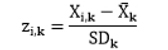
Participants were stratified after data collection into three tertiles using a composite performance score. The bottom tertile was classified as the lower-performance internal reference group, the middle tertile was retained for continuous regression and sensitivity analyses, and the top tertile was classified as the higher-performance group. The composite performance score was adapted from the Total Score of Athleticism approach, in which heterogeneous physical-performance tests are converted into standardized z scores and combined into a single athlete-profile score (Turner,
where Xi,k represents the athlete’s raw score in domain k, X̄k represents the sample mean for that domain, and SDk represents the sample standard deviation. Peak anaerobic power and competition index were coded so that higher values indicated better performance. T-test agility time was reverse-coded before aggregation because shorter completion time indicated better performance. The final composite performance score was calculated as:
This score represented each athlete’s multidimensional performance position relative to the study cohort. The top and bottom tertiles were used for the primary internal performance comparison, consistent with prior z-score-derived athlete profiling work that applied tertile-based interpretation of composite athleticism scores (Maestroni et al., All groups consisted of trained national-level martial artists, and stratification was based on observed performance distribution across anaerobic power, agility, and competition-index domains. All echocardiographic assessors were blinded to group assignment and performance outcomes. To mitigate selection and confirmation bias, stratification was performed post hoc based on raw score distributions without investigator knowledge of echo results. Demographic variables, training age, and sport discipline were recorded for bias modeling. Additionally, observer expectancy bias was minimized by automated scoring of performance metrics wherever possible. |
| Echocardiographic Imaging Resting echocardiography standardization |
Resting echocardiography followed the same acquisition protocol for the lower-performance internal reference group and the higher-performance group. Athletes arrived between 07:30 and 09:30 after an overnight fast of at least eight hours, with testing completed between 08:00 and 10:30 in a controlled imaging room maintained at 22-24°C and 40-60% relative humidity. A 10-minute seated stabilization period preceded all measurements. Resting systolic blood pressure, diastolic blood pressure, heart rate, and peripheral oxygen saturation were recorded using an Omron HEM-7120 automated sphygmomanometer and fingertip pulse oximetry before image acquisition. Athletes avoided caffeine and alcohol for 24 hours and strenuous exercise, sparring, resistance training, and high-intensity conditioning for 48 hours before testing. Compliance was documented on a pre-test screening form that recorded last meal time, caffeine intake, alcohol intake, medication use, training activity during the previous 48 hours, and acute symptoms. Athletes who did not meet these pre-test conditions were rescheduled within the same testing week. |
| Timing and order of cardiac and performance testing |
Cardiac and performance assessments were completed within a fixed 48-hour testing window for each athlete. Resting echocardiography was performed first to prevent acute fatigue from affecting GLS, GWE, GWW, or MPI measurements. Neuromotor testing was completed three hours after echocardiography on the same day, following a standardized light meal and seated recovery. Reaction time testing was performed first, followed by the Balance Error Scoring System, the Finger-to-Nose Alternation Test, and the T-test. The Wingate Anaerobic Test was completed 24 hours after echocardiography to separate maximal anaerobic exertion from resting myocardial imaging. Athletes were instructed to avoid competition, sparring, resistance training, and high-intensity conditioning between cardiac imaging and performance testing. |
| Imaging procedure |
Echocardiographic imaging was conducted using the Vivid E95 ultrasound platform (GE Healthcare, United States) equipped with an M5Sc-D sector array transducer (see |
| Global Longitudinal Strain (GLS) |
GLS was measured through two-dimensional speckle-tracking echocardiography following the American Society of Echocardiography consensus protocol. The apical 4-chamber, 2-chamber, and long-axis views were imported into EchoPAC and the endocardial border was manually traced at end-diastole using the software’s integrated region-of-interest tool. The software's clinical algorithm then tracked acoustic speckles frame by frame across the 17-segment left ventricular model throughout the cardiac cycle. The tracking accuracy was visually verified for each segment and adjusted when deviation exceeded 10 percent. Tracking quality was required to exceed 85 percent across segments for the data to be accepted. End-systole was automatically identified by the software using aortic valve closure timing derived from Doppler inputs. Global longitudinal strain was defined as the average peak negative strain value from all 17 segments, expressed as a percentage, and calculated as the mean of three validated cardiac cycles per view. |
| Myocardial Work Indices (GWE and GWW) |
Myocardial work analysis was performed within EchoPAC using pressure-strain loop modeling derived from noninvasive blood pressure inputs. Immediately prior to imaging, brachial systolic and diastolic blood pressures were recorded using an automated monitor and entered into the software to generate an individualized reference pressure curve. Brachial blood pressure was measured twice at one-minute intervals after seated rest using the Omron HEM-7120 device. When systolic or diastolic values differed by more than 5 mmHg between readings, a third measurement was obtained, and the mean of the two closest readings was entered into EchoPAC. GWE and GWW were interpreted as pressure-adjusted myocardial work indices derived from non-invasive pressure-strain loop modeling. These indices were not treated as direct measurements of whole-body metabolic energy efficiency, because their calculation depends on cuff-derived blood pressure calibration, stable loading conditions, and adequate speckle-tracking quality during the analyzed cardiac cycles. This curve was temporally aligned with the longitudinal strain data obtained from speckle-tracking. The software integrated the pressure and deformation signals to compute segmental myocardial work throughout systole. Global work efficiency was defined as the ratio of constructive work to the sum of constructive and wasted work, expressed as a percentage, while global wasted work reflected energy expenditure during myocardial lengthening in systole and shortening in isovolumic relaxation. Both indices were calculated using segmental data from all 17 left ventricular segments and averaged across three validated cardiac cycles. Tracking quality criteria were applied identically as in the GLS protocol. |
| Myocardial Performance Index (MPI) |
The myocardial performance index was calculated using pulsed-wave tissue Doppler imaging of the lateral mitral annulus in the apical 4-chamber view. Doppler sample volume was positioned 1 centimeter below the lateral annular plane and Doppler settings were adjusted to maintain a sweep speed of 100 millimeters per second for precise time interval measurement. Three cardiac cycles were analyzed per subject. Isovolumic contraction time was measured from the end of the A-wave to the onset of the systolic S-wave, isovolumic relaxation time from the end of the S-wave to the beginning of the early diastolic E-wave, and ejection time was measured as the duration of the S-wave. MPI was calculated using the formula: MPI = (IVCT + IVRT) ÷ ET. All measurements were performed manually using caliper tools within EchoPAC and were reviewed by a second blinded investigator in 20 percent of the cases to assess inter-rater reliability. Both left and right ventricular MPI were calculated where Doppler alignment permitted. |
| Instruments Primary outcomes |
Anaerobic power was assessed using the Wingate Anaerobic Test (WAnT), administered on a Monark 894E Peak Bike Ergometer (Monark Exercise AB, Sweden), a validated platform for high-intensity anaerobic testing in athletic populations. The WAnT followed the standard 30-second protocol originally established by Bar-Or ( Agility was assessed using the T-Test, a four-directional change-of-direction protocol standardized in athletic performance research. The layout consisted of four cones arranged in a T-formation over a 10-yard by 10-yard configuration. Athletes sprinted forward, shuffled laterally, and backpedaled in sequence, with timing captured via electronic timing gates (Brower TCi, Brower Timing Systems, United States). Only fully completed trials without cone dislodgment were scored. Each athlete completed two familiarization trials and two timed attempts; the best trial was retained for analysis. The T-Test is a publicly available field protocol and has been validated in competitive sport settings with test-retest reliability exceeding ICC = 0.89 and concurrent validity with multidirectional speed tests ranging from r = 0.82 to 0.91 (Sassi et al., Competition performance was quantified using a 10-point competition index derived from each athlete’s five most recent official sanctioned matches within the 12 months preceding echocardiographic assessment. Matches were eligible if they were recorded in federation logs and occurred at regional, national, or international level. Each match score combined three components: event tier, match outcome, and technical margin. Event tier contributed 1 point for regional competition, 2 points for national competition, and 3 points for international competition. Match outcome contributed 0 points for loss, 1 point for draw or no-decision, and 3 points for win. Technical margin contributed 0 points for dominant loss, 1 point for narrow point loss, 2 points for point-based win, and 4 points for technical superiority, submission, stoppage, or knockout win. The maximum score per match was therefore 10 points. The five match scores were averaged to produce the final competition index. When more than five official sanctioned matches were available, the five matches closest to the echocardiographic assessment date were used. Competition records were verified against federation records and coach-confirmed match sheets. |
| Secondary outcomes |
Neuromotor performance was assessed using three validated public-domain instruments. (i) Simple reaction time was measured via the Human Benchmark online test ( |
| Statistical analysis |
All analyses were conducted in R version 4.3.2 (R Foundation for Statistical Computing, Vienna, Austria), with statistical significance set at two-tailed p < 0.05. The primary group comparison used athletes in the bottom and top tertiles of the composite performance score, classified as the lower-performance internal reference group and the higher-performance group, respectively. The full sample of 180 athletes was retained for continuous regression, moderation, and sensitivity analyses. Distributional assumptions were examined using histograms, Q-Q plots, and Shapiro-Wilk tests, and variance equality was assessed using Levene’s test. Between-group comparisons used independent-samples t tests for normally distributed variables with equal variances, Welch-corrected t tests for unequal variances, and Mann-Whitney U tests for markedly non-normal variables. Cohen’s d with 95% confidence intervals was reported for all main between-group comparisons. Associations between myocardial indices and performance outcomes were examined using linear regression for continuous outcomes and logistic regression for higher-performance versus lower-performance classification. The base covariate model included age, sex, discipline, training age, weekly training load, body fat percentage, and skeletal muscle mass. Myocardial indices were then entered hierarchically as GLS, GWE, GLS plus GWE, MPI, and GWW to assess their incremental contribution beyond anthropometric and training variables. Multicollinearity was assessed using variance inflation factors, with values < 5.0 considered acceptable. Logistic model discrimination was evaluated using area under the receiver operating characteristic curve, sensitivity, specificity, and 95% confidence intervals generated from 1, 000 bootstrap resamples. Sex and discipline moderation were tested in full-sample regression models using interaction terms between each myocardial index and the moderator variable. These analyses were treated as exploratory and interpreted only when each stratum contained at least 25 athletes and logistic models retained at least 10 classification events per estimated predictor. Sensitivity analyses tested whether the direction and magnitude of the GLS, GWE, GWW, and MPI associations remained stable when performance classification was repeated using tertile, quartile, and decile thresholds. Multiple testing across related echocardiographic and performance outcomes was controlled using the Benjamini-Hochberg false discovery rate procedure. |
|
|
| Baseline characteristics |
The full sample included 180 national-level martial artists distributed across the lower-performance internal reference group (n = 60), middle tertile (n = 60), and higher-performance group (n = 60). Age, height, body mass, body mass index, sex distribution, and martial arts discipline were comparable across the lower- and higher-performance groups ( |
| Primary outcomes |
The primary performance comparison used 120 athletes from the lower and higher performance tertiles. The higher-performance group had greater Wingate peak power, greater mean power, lower fatigue index, shorter time to peak power, shorter T-test completion time, fewer agility penalties, higher technical execution scores, higher win-loss ratio, and higher competition-index scores ( Echocardiographic outcomes were compared between the lower-performance internal reference group and the higher-performance group ( Segmental GLS analysis showed more negative strain values in the higher-performance group across all 17 LV segments ( |
| Secondary outcomes |
Secondary neuromotor outcomes were also compared between the lower- and higher-performance tertiles ( Correlation analyses were conducted in the full sample of 180 athletes ( |
| Robustness and subgroup analyses |
Multivariable regression models used the full sample of 180 athletes. The base covariate model included age, sex, discipline, training age, weekly training load, body fat percentage, and skeletal muscle mass ( Logistic classification models used the lower-performance internal reference group and higher-performance group only (n = 120). The combined GLS plus GWE model had higher discrimination than the base covariate model and the single-index models ( Sex and discipline moderation were evaluated in full-sample regression models using interaction terms. Subgroup sample sizes were reported before interpretation. Sex interactions were exploratory because the female subgroup was smaller than the male subgroup, although both strata exceeded the minimum sample-size threshold ( Sensitivity analyses examined whether the GLS and GWE associations remained stable when classification thresholds were changed. The combined GLS plus GWE model retained similar direction and magnitude across tertile, quartile, and decile definitions, although the decile model had wider confidence intervals because it used only the most extreme 10% of the distribution ( |
|
|
The main findings indicate that higher-performance martial artists had higher GWE, lower GWW, greater GLS magnitude, lower LV and RV MPI, higher anaerobic output, faster agility performance, fewer BESS errors, and stronger internal classification performance when GLS and GWE were entered into adjusted models. These findings support RQ1 and H1 by showing that myocardial deformation, myocardial work, and timing indices were associated with anaerobic, agility, neuromotor, and competition-related outcomes. RQ2 and H2 were supported most clearly for GLS and GWE because these indices added explanatory information beyond age, sex, discipline, training age, weekly training load, body fat percentage, and skeletal muscle mass. RQ3 and H3 were supported within the internal tertile-based classification framework because the combined GLS plus GWE model showed stronger discrimination than the covariate-only and single-index models. This evidence should be interpreted as cross-sectional association and internal classification, not as longitudinal prediction of competitive success or validation for athlete selection. The higher GWE and lower GWW values indicate a larger proportion of constructive myocardial work relative to total myocardial work and less wasted work during the analysed resting cardiac cycles. This interpretation is consistent with the pressure-strain loop framework, in which GWE and GWW are derived from speckle-tracking deformation data calibrated against brachial blood pressure rather than direct metabolic measurement (Wang and Yin, High-performance athletes demonstrated significantly greater GLS magnitude than the lower-performance internal reference group, indicating greater longitudinal myocardial shortening at rest. Abibillaev et al. ( Anaerobic and agility outcomes aligned with the cardiac timing and myocardial work indices. The higher-performance group showed greater peak power, lower fatigue index, and shorter time to peak output, while lower MPI was associated with shorter T-test time and fewer BESS errors. MPI provides a timing-based complement to GLS, GWE, and GWW because it expresses combined isovolumic contraction and relaxation time relative to ejection time. Lower MPI values in this cohort therefore indicate more compact systolic-diastolic timing at rest, which may accompany the physiological profile of athletes with faster change-of-direction performance and fewer balance errors. This interpretation remains cohort-specific because Alsafi et al. ( Model-based analyses indicated that GLS and GWE contributed to internal performance classification after adjustment for anthropometric and training covariates. The combined GLS plus GWE model showed stronger discrimination than either index alone, suggesting that longitudinal deformation magnitude and pressure-adjusted myocardial work provided complementary information within the tertile-based performance framework. Kandels et al. ( GLS, GWE, GWW, and MPI aligned with anaerobic output, agility, balance, coordination, and competition-index measures in the same cohort. This pattern indicates that the echocardiographic indices contributed physiological information that paralleled the multidomain performance profile rather than functioning as isolated cardiac markers. Martial arts performance requires repeated acceleration, deceleration, visual-motor response, postural correction, coordination, and technical execution during short high-intensity exchanges. Resting GLS, GWE, GWW, and MPI add information on myocardial deformation, pressure-adjusted work, and systolic-diastolic timing under standardized conditions. Spanakis et al. ( |
| Theoretical and Practical Implications |
The findings support a cardiomechanical interpretation of performance stratification in martial arts, where GLS, GWE, GWW, and MPI align with anaerobic output, agility, balance control, coordination, and competition-index measures. The theoretical contribution is the integration of resting myocardial deformation, pressure-adjusted myocardial work, and systolic-diastolic timing into a multidomain athlete-profile framework. This framework is relevant to martial arts because performance requires repeated high-intensity exchanges, rapid recovery intervals, postural correction, and neuromotor precision. In practical terms, echocardiographic indices may be used as adjunctive monitoring markers alongside Wingate output, agility testing, BESS, FTNAT, training-load history, and competition records. Their value is strongest when interpreted as part of a broader performance and cardiac-screening battery, especially for identifying athletes who may need closer monitoring of cardiac adaptation, recovery status, or training-load tolerance. Application to athlete selection, talent identification, or development policy requires longitudinal validation, external replication, stress-imaging evidence, and proof of added value beyond established performance tests. |
| Limitations and Future Research |
The cross-sectional design limits inference to association and internal classification. The study cannot determine whether GLS, GWE, GWW, or MPI preceded performance status, resulted from long-term training exposure, or changed in response to recent training load. Group allocation was based on post hoc tertiles of a composite performance score, which strengthened separation between internal comparison groups but may overestimate classification performance when applied to independent athlete populations. Recruitment through federation lists, coaches, and national training centers may have favored athletes already retained in structured competitive systems. The use of resting echocardiography also means that myocardial responses during combat-like exertion, fatigue, and recovery were not captured. GWE and GWW were derived from cuff-pressure-calibrated pressure-strain loop analysis, so loading conditions, blood pressure measurement, and speckle-tracking quality remain important sources of measurement variation. Multiple related echocardiographic and performance outcomes were examined, although false-discovery correction, bootstrap stability testing, and sensitivity analyses were applied. Sex and discipline moderation analyses were exploratory interaction tests in the full sample, with subgroup sizes reported, and should be interpreted as preliminary. Future studies should use longitudinal designs, external validation cohorts, balanced sex-stratified sampling, stress echocardiography, repeated measures across training phases, and prospective competition follow-up to determine whether these indices track training response, recovery status, or future performance change. |
|
|
Higher-performance martial artists showed more favorable resting cardiac strain, myocardial work, and timing indices than the lower-performance internal reference group in this cross-sectional cohort. GLS magnitude and GWE were consistently associated with anaerobic power, agility, neuromotor outcomes, and internal performance classification, while lower MPI aligned with shorter agility time and fewer balance errors. Echocardiographic indices therefore appear useful as adjunctive markers for performance-related monitoring in trained martial artists. The results should be interpreted as cohort-based associations within an internal classification framework. Longitudinal validation, external replication, stress-imaging protocols, and cost-effectiveness evaluation are required before myocardial efficiency screening can be recommended for athlete-development policy, selection systems, or injury-prevention programs. |
| ACKNOWLEDGEMENTS |
The datasets generated during the current study are not publicly available but are available from the corresponding author upon reasonable request. The authors declare that they have no conflict of interest. All experimental procedures were conducted in compliance with the relevant legal and ethical standards of the country where the study was carried out. The authors declare that no Generative AI or AI-assisted technologies were used in the writing of this manuscript. |
| AUTHOR BIOGRAPHY |
|
| REFERENCES |
|



 Abibillaev, D.A., Kocyigit, F., Baatyrbekova, A., Abdurasulova, A.K., Osmonaliev, K.R., Satybaldyev, S.A., Ismailov, Z.K., Kydyralieva, R.B., Salibaev, O.A., Kudaiberdiev, T.Z. (2025) Cardiac remodeling and global longitudinal strain in young male competitive athletes: A comparative study across different training modes. Heart, Vessels and Transplantation 9(1).