|
|
|
| |
| ABSTRACT |
|
Hydrogen-rich water (HRW) supplementation has been proposed to exert anti-fatigue effects during exercise; however, its impact on exercise performance and autonomic nervous system (ANS) function during repeated sprinting remains unclear. The aim of this study was to examine the effects of acute pre-exercise HRW ingestion on repeated sprint performance, ANS regulation, and blood lactate concentration. This randomized, single-blind, placebo-controlled crossover study included 13 male university athletes (23.9 ± 2.0 years). Each participant completed two sessions of 7×6-second all-out cycling sprints interspersed with 30-second recovery intervals, with a one-week washout period between sessions. Critical flicker fusion frequency, heart rate, heart rate variability (HRV), and blood lactate were assessed at baseline, during exercise, and at 0-5 min and 10 min post-exercise. Compared to the placebo trial, the HRW trial demonstrated significantly higher average power output (d = 0.61) and significantly lower total work decrement and fatigue index (d = 0.62; d = 0.64). Post-exercise HRV recovery was significantly accelerated in the HRW trial, including RMSSD (d = 0.62), LF/HF ratio (d = 0.82), SampEn (d = 0.79), and DFAα1 (d = 0.79). Blood lactate at 3 min post-exercise was approximately 1 mmol/L lower in the HRW trial (d = 0.64). These findings suggest that acute HRW ingestion attenuates the decline in power output, accelerates ANS recovery, and enhances lactate clearance following repeated sprint exercise. |
| Key words:
Hydrogen-rich-water, repeated sprint ability, heart rate variability, critical flicker fusion frequency, lactate
|
Key
Points
- Acute pre-exercise ingestion of hydrogen-rich water significantly enhances repeated sprint performance by reducing power decrement and sustaining higher average power output across sprints.
- Hydrogen-rich water intake significantly accelerates post-exercise recovery of autonomic nervous system regulation and improves blood lactate clearance following repeated sprint exercise.
|
Repeated Sprint Ability (RSA) is a pivotal athletic trait, denoting the capability for multiple high-intensity sprints with brief recovery intervals (< 60s) (Girard et al., 2011). This attribute is critical in sports like soccer, basketball, and rugby, where athletes frequently engage in short bursts of anaerobic activity. RSA's essence lies in its comprehensive demands on speed, endurance, and recovery, involving muscle strength, energy metabolism, neuromuscular coordination, and cardiovascular function (Milioni et al., 2017). In numerous competitive sports, the outcome often hinges on an athlete's performance under conditions of fatigue. RSA therefore serves as both a performance benchmark and a training target for developing athletes' anaerobic and aerobic capacities (Shi et al., 2018). Repeated high-intensity sprints present a significant challenge, contributing to both peripheral and central fatigue. Peripheral fatigue occurs at the muscular level, with rapid energy depletion and the accumulation of metabolic by-products, leading to reduced muscle strength. Central fatigue involves the nervous system, affecting neural-muscular activation efficiency and overall athletic performance (Tornero-Aguilera et al., 2022). Strategies for mitigating exercise-induced fatigue encompass an array of interventions within the domains of exercise physiology and sports science. These include mild aerobic activities, cryotherapy, massage therapies, and psychological training methodologies. Additionally, nutritional supplementation, especially natural active substances, is equally crucial for repairing bodily damage and alleviating exercise-induced fatigue (VanDusseldorp et al., 2023). In recent years, hydrogen intake, as an emerging natural intervention, has shown potential value in alleviating exercise-induced fatigue. Serving as an antioxidant, hydrogen can reduce oxidative stress, aiding in the alleviation of cell damage and inflammatory responses (Ohsawa et al., 2007). Preliminary studies suggest that hydrogen intake may positively impact athletes' performance and recovery, mitigating both peripheral and central fatigue. In extant randomized controlled trials, participants encompassed professional athletes such as soccer players (Aoki et al., 2012), judo athletes (Drid et al., 2016), cyclists (Da Ponte et al., 2018), among others, as well as general populations (Mikami et al., 2019). The intervention period of hydrogen-rich water intake ranged from acute ingestion on the day of exercise testing (Drid et al., 2016) to ingestion over one week (Hall et al., 2021), and even two weeks (Ostojic and Stojanovic, 2014). The concentration of hydrogen-rich water intake mostly centered around 1000 ppb (Mikami et al., 2019) to 2000 ppb (Aoki et al., 2012). Exercise testing protocols included endurance running tests (Ostojic and Stojanovic, 2014), intermittent exercise tests (Da Ponte et al., 2018), incremental load exercise tests (Mikami et al., 2019), among others. Researchers suggest that hydrogen-rich water may alleviate fatigue, enhance athletic performance, and facilitate injury repair (Yoshimura et al., 2023), while some argue otherwise, contending that hydrogen-rich water lacks stimulant-like effects, and its influence seems contingent upon individual differences in capabilities and states (Aoki et al., 2012; Botek et al., 2020; Hall et al., 2021; Ooi et al., 2020). A recent systematic review concluded (Zhou et al., 2023) that hydrogen supplementation can alleviate fatigue but does not enhance aerobic capacity in healthy adults. Additionally, subgroup analyses indicate that H2 supplementation may be more effective in mitigating fatigue induced by intermittent exercise. Autonomic nervous system (ANS) activity is recognized as a sensitive indicator of perturbations in bodily homeostasis induced by exercise, with heart rate variability (HRV) being a well-accepted non-invasive method to assess ANS activity, particularly vagal modulation (Aubert et al., 2003). Researchers have found that repeated sprint exercise can reduce HRV in young men (Nie et al., 2022). Monitoring exercise training status via HRV has been widely employed in both endurance and high-intensity intermittent exercises (Abreu et al., 2019; Bellenger et al., 2016). Current research indicates that both acute hydrogen-rich water ingestion (Botek et al., 2021) and long-term (4 weeks) ingestion (Watanabe et al., 2017) have positive effects on autonomic nervous system regulation, increasing vagal activity during seated rest. The critical flicker fusion frequency (CFF) is widely used as a simple, non‐invasive proxy of central nervous system (CNS) arousal and visual processing capacity, and-by extension-an indirect marker of central fatigue induced or modulated by physical effort (Clemente-Suárez and Diaz-Manzano, 2019). Current research on hydrogen-rich water ingestion for reducing blood lactate and alleviating high-intensity exercise fatigue remains contentious. Three critical gaps exist in the literature: (1) existing studies have predominantly focused on aerobic endurance activities, with very limited investigation into high-intensity intermittent exercise, particularly repeated sprinting; (2) the effects of HRW on autonomic nervous system (ANS) function during and after repeated sprinting have not been directly examined; and (3) evidence on ANS recovery, as measured by HRV, following acute HRW ingestion in the context of RSA testing is lacking. Given these gaps, this study aimed to investigate the effects of acute pre-exercise HRW ingestion on repeated sprint performance, ANS regulation (assessed via HRV and critical flicker fusion frequency), blood lactate metabolism, and perceived exertion in male university athletes. We hypothesized that acute HRW ingestion prior to RSA testing would improve power output, accelerate post-exercise ANS recovery, and reduce blood lactate accumulation compared to placebo. SubjectsThis study employed a randomized, single-blind (participant-blinded), placebo-controlled crossover design. A fully double-blind design was not implemented because the same research team prepared and electrolyzed the beverages and was therefore aware of the allocation; participants, however, were blinded to beverage assignment. To limit bias, outcome recording and data extraction were performed using anonymized participant identifiers. Sample size was estimated a priori using G*Power 3.1 based on a large effect size (d = 0.80), α = 0.05, and power = 0.80 for a one-tailed paired t-test (consistent with the directional hypothesis that HRW would outperform placebo), yielding a minimum of 12 participants; 13 were enrolled to account for potential dropout. Participants were blinded to beverage assignment through identical-appearing containers and similar taste profiles. Thirteen healthy male university athletes (23.85 ± 1.95 years, 72.8 ± 8.2 kg; comprising seven rugby players, two track and field athletes, two soccer players, and two basketball players (Table 1) were enrolled and categorized under Tier 2 of the McKay et al. (2022).
Participant classification frameworkAll participants had no history of cardiopulmonary diseases or sports injuries and volunteered willingly. The study was approved by the Research Ethics Committee (SCNU-SPT-2023-107). Prior to the experiment, participants were briefed on the purpose, procedures, and potential risks, and were familiarized with the testing protocols.
Hydrogen-rich waterHydrogen-rich water was produced by dissolving hydrogen gas - generated via water electrolysis - into distilled water(Ursua et al., 2012). A hydrogen-rich water generator (Model H8; Guangzhou Yuanshui Environmental Protection Technology Co., Ltd.; quality certification: CANEC2205567202) was used. Distilled water was subjected to 5 minutes of electrolysis, and the resulting dissolved hydrogen concentration (~1600 ppb) was verified using a redox titration method with a dissolved hydrogen measurement reagent (Patent No. CN201810743661.1). The detailed electrolytic reactions have been described elsewhere (Ursua et al., 2012).
Experimental overviewThirteen participants were required to complete two tests with a one-week washout period between them. Before the first test, participants were randomly assigned to either the experimental trial (hydrogen-rich water, hw) or the control trial (placebo water, pw) based on a random number sequence generated using the = RAND() function in Microsoft Excel. Detailed explanations of the testing procedures and instructions were provided to the participants. In the second test, participants consumed a beverage different from the first test; for instance, those initially in the experimental trial consumed the control beverage, and vice versa. Each test session lasted approximately 35 to 40 minutes and was supervised by at least two operators. On the testing day, participants first had their weight measured in the laboratory. Following a 5-minute seated rest, they wore a Polar V800 heart rate monitor and H7 heart rate sensor. Subsequently, blood lactate and critical flicker fusion frequency were sequentially collected, and continuous monitoring of heart rate variability was initiated. Participants then consumed 280 ml of either a placebo (distilled water) or hydrogen-rich water (concentration: 1600 ppb) within 1 minute under operator guidance. They were instructed to avoid movement during consumption and remained seated for 5 minutes after ingestion. Afterward, participants engaged in land stretching, followed by approximately 1 minute of unloaded cycling warm-up on a Monark ergometer 894E. The repeated sprint cycling protocol consisted of 7 × 6-second cycling sprints with a load set at 0.075 kg/kg body weight, separated by 30-second rest intervals. Participants rated their perceived exertion (RPE) immediately after each sprint, completing the assessment within 30 seconds, for a total of 7 repetitions. Upon completion of the exercise, participants engaged in a 1-minute unloaded cooldown on the bike, followed by dismounting and seated rest. Critical flicker fusion frequency and heart rate variability were measured following the cooldown period and 10 minutes after exercise, and blood lactate was measured 3 minutes and 10 minutes after exercise. The experimental protocol is illustrated in the flowchart below (Figure 1).
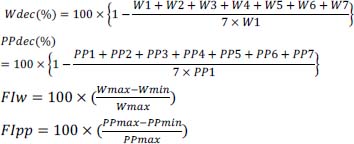
Repeated sprint ability testThe test metrics include peak power output (PP) during exercise, average power output (AP), total work done (W), as well as decrement scores and fatigue indices for both total work and peak power (Wdec, PPdec, FIw, FIpp). The specific formulas for calculating are as follows:
Central nervous system fatigue testThe test parameter is critical flicker fusion frequency, measured using the BD-II-118 model (Serial Number: 21013096). Equipment parameters were set as follows before testing: light intensity (1/2), light-dark ratio (1:1), background light (0), color selection (white). The test involved recording two values for each trial (ascending trial starting from 12 Hz, increasing frequency until the subject indicated the light point changed from flickering to non-flickering; descending trial starting from 50 Hz, ending when the subject indicated the light point began to flicker). The average of the two test results was taken.
Autonomic nervous system state testHeart rate variability (HRV) was recorded continuously from resting state to 10 minutes post-exercise using a Polar V800 heart rate monitor and Polar H7 heart rate sensor. Data were exported from the Polar Flow website for a 5-minute duration at specified time points during the day and analyzed using Kubios HRV Standard software (version 3.5; Kubios Oy, Kuopio, Finland). Ectopic beats and artifacts were automatically detected and corrected using the software's built-in correction algorithm prior to spectral analysis. Key indicators included time-domain metrics (SDNN, RMSSD), frequency-domain metrics (HF(ms2), LF/HF), and nonlinear metrics (SampEn, DFAα1).
Lactate metabolism testThe indicator is blood lactate, measured three times: baseline values in a resting state before exercise, approximately 3 minutes after exercise, and 10 minutes into the post-exercise rest period. German Lactate Scout 4 analyzer and blood lactate test strips were used for analysis, ensuring the first drop of blood was wiped away to prevent contamination.
Perceived Exertion (RPE) testRPE was recorded seven times, with an immediate confirmation of the level after each sprint. The Borg scale, developed by Swedish psychologist Borg (1985), ranging from "extremely easy" to "exhausted," was employed for subjective fatigue assessment. The scale comprised fifteen levels, with a minimum score of 6 and a maximum of 20.
Statistical analysisThe statistical data are presented as mean ± standard deviation (M ± SD). Data analysis was conducted using SPSS 26.0 software. Shapiro-Wilk and Levene tests were employed for normality and homogeneity of variance checks, respectively. Paired-samples t-tests were utilized to compare the mean differences in heart rate variability, critical flicker fusion frequency, blood lactate levels, and subjective fatigue perception among participants between pre-exercise, mid-exercise, post-exercise, and 10 minutes of rest. For the data obtained from the seven repeated sprints, a two-way repeated measures analysis of variance (ANOVA) was performed to assess the main effects (hydrogen-rich water and time) and their interaction on power output and subjective fatigue perception. Because of the crossover design, both condition (HRW vs. placebo) and sprint number were treated as within-subject factors using a fully within-subject error structure. Post-hoc comparisons were carried out using the Bonferroni method when a significant main effect was observed. Effect sizes were evaluated using Cohen's d and η2, with Cohen's d classified as small (≥ 0.20), medium (≥ 0.50), and large (≥ 0.80), and η2 categorized as small (≥ 0.01), medium (≥ 0.06), and large (≥ 0.14) (Cohen, 1988). All statistical tests were two-tailed, and the significance level was set at 0.05.
Impact of hydrogen-rich water consumption on repeated sprinting performanceThe results of paired-samples t-tests (Figure 2) revealed that during repeated sprinting, the experimental trial (hw) exhibited a significantly higher average power (AP) compared to the control trial (pw) (p = 0.049, d = 0.61). No significant differences between trials were observed in average peak power and total work (p = 0.276, d = 0.32; p = 0.099, d = 0.5). In terms of power decrement scores and fatigue indices, the experimental trial (hw) showed significantly lower total work decrement (Wdec) and fatigue index (FIw) compared to the control trial (pw) (p = 0.045, d = 0.62; p = 0.041, d = 0.64). However, no significant differences were observed in peak power decrement (PPdec) and fatigue index (FIpp) between the two trials (p = 0.241, d = 0.34; p = 0.276, d = 0.32). A fully within-subject two-way repeated-measures ANOVA (condition × sprint) was conducted for peak power (PP), average power (AP), and total work (W). A significant main effect of sprint was observed for all three variables (PP: F(6, 72) = 47.69, p < 0.001, ηp2 = 0.80; AP: F(6, 72) = 57.74, p < 0.001, ηp2 = 0.83; W: F(6, 72) = 54.89, p < 0.001, ηp2 = 0.82), reflecting progressive fatigue across sprints. A significant main effect of condition was found for AP (F(1, 12) = 4.81, p = 0.049, ηp2 = 0.29), indicating higher average power in the HRW condition, whereas the condition main effect did not reach significance for PP (F(1, 12) = 1.30, p = 0.276, ηp2 = 0.10) or W (F(1, 12) = 3.21, p = 0.099, ηp2 = 0.21). No condition × sprint interaction was significant (PP: F(6, 72) = 0.50, p = 0.807; AP: F(6, 72) = 0.60, p = 0.733; W: F(6, 72) = 1.52, p = 0.184). The condition main effect for AP was consistent with the paired-samples comparison (p = 0.049), and aggregate paired t-tests yielded p-values identical to the corresponding ANOVA condition effects, confirming the fully within-subject model specification.
Effects of hydrogen-rich water consumption on neural system statusIn terms of heart rate variability time-domain indices, RMSSD was significantly higher in the experimental trial compared to the control trial within 5 minutes after exercise cessation (p = 0.045, d = 0.62). Regarding frequency-domain indices, no significant between-trial differences were observed in HF power. However, the LF/HF ratio was significantly lower in the HRW trial compared to the PW trial at 10 min post-exercise (p = 0.012, d = 0.82). Among nonlinear indices, SampEn was significantly higher in the experimental trial than the control trial 10 minutes after exercise (p = 0.015, d = 0.79), while DFAα1 was significantly lower in the experimental trial than the control trial in the same period (p = 0.047, d = 0.61). No significant differences in heart rate were observed between the two trials at various measurement time points (p > 0.05). Simultaneously, no significant differences were found in the critical flicker fusion frequency between the two trials at different measurement time points (p > 0.05) (Figure 3).
Influence of hydrogen-rich water consumption on metabolic profilePre-exercise ingestion of hydrogen-rich water significantly influenced blood lactate concentration at 3 minutes post-exercise, with the experimental trial (hw) exhibiting a reduction of approximately 1 mmol/L compared to the control trial (pw) (p < 0.05, d = 0.64). However, 10 minutes into the rest period, there was no significant difference in blood lactate concentration between the two trials (Figure 4).
Effects of hydrogen-rich water consumption on perceived exertionThe subjective fatigue perception during repeated sprinting did not exhibit a significant difference between the experimental trial (hw) and the control trial (pw) (p > 0.05). Simultaneously, the fully within-subject ANOVA revealed a significant main effect of sprint (F(6, 72) = 91.01, p < 0.001, ηp2 = 0.88), whereas neither the main effect of condition (F(1, 12) = 0.007, p = 0.936, ηp2 = 0.001) nor the condition × sprint interaction (F(6, 72) = 1.26, p = 0.286, ηp2 = 0.10) was significant.
This study provides the first comprehensive evaluation of the effects of acute HRW ingestion on neurophysiological and metabolic responses during and after repeated sprint exercise in male university athletes. The paired-samples t-tests revealed significant improvements in mean AP and reductions in Wdec and FIw with HRW, indicating that HRW attenuated cumulative power decline across the sprint bout. The fully within-subject ANOVA confirmed a significant condition main effect for average power (p = 0.049), consistent with the paired-samples comparison, whereas peak power and total work showed the same direction without reaching significance, indicating that HRW most clearly benefited sustained average power output across the sprint bout. Simultaneously, ANS regulatory balance recovered more rapidly after exercise, and blood lactate concentration was significantly lower at 3 min post-exercise, collectively reflecting a reduced overall fatigue burden. One of the noteworthy findings in this study is the substantial reduction in the overall power decline during seven repeated sprints with the intake of hydrogen-rich water, corroborating Botek et al.'s (2022) research. The significant differences observed in decrement score and fatigue index suggest a positive role for hydrogen-rich water in sustaining high-power output during consecutive sprints, implying that hydrogen may enhance exercise efficiency by attenuating neuromuscular fatigue and optimizing energy metabolism processes. Furthermore, this study did not observe a significant increase in peak power (condition main effect: p = 0.276, ηp2 = 0.10), although the direction favored HRW. This dissociation - a clear benefit for average power but not peak power - suggests that HRW primarily supports the maintenance of sustained power output across repeated efforts rather than maximal single-sprint explosiveness, possibly reflecting its proposed role in attenuating cumulative oxidative and metabolic fatigue rather than enhancing peak neuromuscular output. This pattern may also relate to experimental design, participants' training levels, and intake timing (Da Ponte et al., 2018). Nevertheless, the significant improvements in the decrement score and fatigue index offer a fresh perspective on the application of hydrogen-rich water in exercise science, particularly for optimizing high-intensity exercise and recovery strategies. Concurrently, a notable decrease in blood lactate concentration was observed after hydrogen-rich water intake, signifying its crucial implications for understanding athlete recovery and subsequent performance. Previous research has also indicated that hydrogen-rich water intake effectively inhibits lactate production during high-intensity exercise (Drid et al., 2016), further supporting our findings. It is important to note that molecular hydrogen (H2) is not a metabolic substrate and does not directly remove lactate; rather, its selective scavenging of cytotoxic ·OH radicals (Ohsawa et al., 2007) helps preserve mitochondrial electron-transport efficiency (Ohta, 2015), thereby supporting conditions more favorable for lactate shuttling and oxidative clearance rather than net accumulation. Therefore, this not only aids in reducing lactate accumulation but may also promote faster lactate clearance, enhancing overall athletic performance and recovery capability. Therefore, hydrogen intake could emerge as a crucial tool for athletes in managing lactate accumulation during high-intensity training and competition. Another key finding in the study is the significant acceleration of post-exercise heart rate variability (HRV) recovery following hydrogen-rich water intake. Given that high-intensity intermittent exercise often leads to parasympathetic suppression, resulting in prolonged HRV recovery times(Sousa et al., 2015), our findings reflect the potential of hydrogen-rich water intake to enhance the body's autonomic regulation and increase vagal nerve excitability. HRV is a crucial indicator for assessing autonomic nervous system function and cardiac health(Wang et al., 2022), and its rapid recovery implies that athletes can more effectively return to a physiological equilibrium state after high-intensity exercise. HRV/vagal indices recovered earlier, yet heart rate itself did not fall faster. This is expected because early post-exercise heart rate is governed largely by residual sympathetic drive and thermoregulatory inertia, whereas HRV (e.g., RMSSD/SDNN, HF) more specifically indexes vagal-baroreflex modulation bandwidth (Buchheit, 2014). This is vital for athlete recovery and overall health, as robust autonomic nervous system regulation contributes to reducing cardiovascular risks, enhancing post-exercise recovery efficiency, and potentially mitigating the risks of overtraining. It is worth noting that the critical indicator of central arousal and fatigue assessment, the critical flicker fusion frequency (CFF), did not exhibit significant changes in athletes before and after repeated sprint exercise. CFF, commonly used in central fatigue assessments(Clemente-Suárez and Diaz-Manzano, 2019), suggests two possible explanations for the null CFF finding. First, the short duration of the RSA protocol (~7 minutes) may have been insufficient to generate meaningful central nervous system fatigue detectable by CFF, which appears more sensitive to prolonged exercise conditions. Second, CFF may lack the resolution needed to detect subtle changes in cortical arousal following brief high-intensity bouts; electroencephalography or reaction-time paradigms may offer greater sensitivity. Consequently, neither HRW nor the sprint protocol produced detectable CFF changes, leaving the question of HRW's influence on central fatigue open. Future studies should examine CFF responses under longer or more cognitively demanding exercise protocols and consider combining it with complementary central fatigue measures. However, the specific mechanisms by which hydrogen influences exercise and recovery capabilities remain unclear. We speculate on the following potential pathways: (1) Free Radical Scavenging: Hydrogen may directly or indirectly selectively scavenge harmful free radicals, thus protecting cells and maintaining normal function (Ohsawa et al., 2007). (2) Enzymatic Regulation: Hydrogen enhances the activity of antioxidant and metabolic enzymes while regulating various enzymatic reactions within the body, ensuring orderly biochemical processes (Cai et al., 2012; Todorovic et al., 2020). (3) Neuroprotective Effects: Hydrogen may attenuate exercise-induced inflammation and oxidative stress within the nervous system; however, because no between-trial difference in CFF was observed, the present data provide no direct evidence for a central or cortical effect, and this pathway remains speculative (Hong et al., 2022; Hu et al., 2019). (4) Metabolic Enhancement: Hydrogen promotes the utilization of energy substrates such as liver glycogen, increases ATP levels, enhances components of the blood buffering system, and improves lactate metabolism, thereby ensuring sustained and efficient energy supply and utilization (Dohi et al., 2014; Kawamura et al., 2019; Ostojic and Stojanovic, 2014). These pathways are believed to interact and mutually influence each other. In this study, acute H2 intake appears to facilitate a time-lagged shift back toward vagal predominance during seated recovery, most plausibly via reduced oxidative “noise” at baroreflex-brainstem-cardiac interfaces. Taken together, these findings support a beneficial role of HRW in enhancing repeated sprint capacity and accelerating post-exercise recovery. Therefore, the conclusion that HRW “enhances autonomic regulatory balance and metabolic recovery capability” should be interpreted as an indirect, recovery-phase systems effect, not a primary metabolic eraser. LimitationsSeveral limitations should be considered when interpreting these results. First, the relatively small sample size (n = 13) limits statistical power, particularly for interaction effects in the ANOVA. Based on the a priori analysis, the enrolled sample provided adequate power only for large effects (d ≈ 0.80); the study was therefore likely underpowered to detect smaller between-condition differences, and non-significant findings should be interpreted with this in mind. Second, participants were exclusively male university athletes, restricting generalizability to female athletes, older populations, or elite competitors. Third, the study used a single-blind design: although participants were blinded, the investigators who prepared the beverages were not, which is a potential source of bias; future studies should adopt a fully double-blind design. Fourth, dissolved hydrogen concentration in the water was not verified immediately prior to each ingestion session; any concentration decay between preparation and consumption could reduce the actual H2 dose received. Fifth, no direct biomarkers of oxidative stress (e.g., malondialdehyde, superoxide dismutase) were measured, preventing mechanistic conclusions. Sixth, CFF lacks sensitivity for detecting short-duration CNS fatigue; future studies should incorporate complementary central fatigue measures. Seventh, post-exercise HRV acquisition partially coincided with fingertip lancet punctures for lactate analysis. This procedural coupling likely introduced transient nociceptive-induced sympathetic activation and erratic breathing patterns, which may bias HRV outcomes despite consistent application of Kubios artifact correction algorithms. Future research should expand to diverse exercise modalities, include female cohorts, verify H2 concentration at point of consumption, and incorporate oxidative stress biomarkers to elucidate the underlying mechanisms.
Ingesting hydrogen-rich water enhanced overall performance during repeated sprint exercise. Specifically, HRW improved repeated sprint ability by maintaining higher average power output and effectively reducing the magnitude of power decline across sprints. Notably, no significant effect was observed on peak power, indicating that HRW supports sustained rather than maximal single-sprint power. Short-duration repeated-sprint exercise caused significant peripheral fatigue and autonomic disruption. HRW consumption facilitated post-exercise parasympathetic restoration and improved lactate metabolic capacity, indicating that hydrogen supplementation effectively supports autonomic and metabolic recovery after high-intensity exercise.
| ACKNOWLEDGEMENTS |
We are grateful to the study participants for their cooperation and willingness to participate. The laboratory technicians at 618 Laboratory are thanked for their great dedication, skilled assistance and coordination. Yankang.Jiang, is thanked for his assistance in providing the critical flicker fusion frequency equipment. Special thanks to Guangzhou Yuanshui Environmental Protection Technology Co., Ltd. for providing the equipment used to prepare hydrogen-rich water in this study. It must be emphasized that this provision does not affect the objectivity and scientific rigor of the experiment. No other authors have a conflict of interest to declare. The datasets generated during and/or analyzed during the current study are not publicly available, but are available from the corresponding author who was an organizer of the study. |
|
| AUTHOR BIOGRAPHY |
|
 |
Zhihao Chen |
| Employment: School of Physical Education and Sports Science, South China Normal University |
| Degree: MSc |
| Research interests: Exercise, Exercise Physiology, Sports nutrition |
| E-mail: m18602025618@163.com |
| |
 |
Meilan Chi |
| Employment: School of Physical Education and Sports Science, South China Normal University |
| Degree: BSc |
| Research interests: Endurance exercise under environmental stresses |
| E-mail: 45658630@qq.com |
| |
|
Ruizhi Liu |
| Employment: School of Physical Education and Sports Science, South China Normal University |
| Degree: MSc |
| Research interests: Sports injuries, Sports training and rehabilitation |
| E-mail: scnuray@126.com |
| |
|
Lianzhen Ma |
| Employment: School of Physical Education and Sports Science, South China Normal University |
| Degree: PhD |
| Research interests: Sociology of sport, Sports training |
| E-mail: malianzhen@m.scnu.edu.cn |
| |
 |
Yupeng Shen |
| Employment: School of Physical Education and Sports Science, South China Normal University |
| Degree: PhD |
| Research interests: Exercise, Sports training, Exercise Physiology, Sports nutrition, Recovery, Sports performance |
| E-mail: yupengshen@scnu.edu.cn |
| |
|
| |
| REFERENCES |
 Abreu, R.M.d., Rehder-Santos, P., Simões, R.P., Catai, A.M. (2019) Can high-intensity interval training change cardiac autonomic control? A systematic review. Brazilian Journal of Physical Therapy 23, 279-289. Crossref |
Aoki, K., Nakao, A., Adachi, T., Matsui, Y., Miyakawa, S. (2012) Pilot study: Effects of drinking hydrogen-rich water on muscle fatigue caused by acute exercise in elite athletes. Medical Gas Research 2, 12. Crossref |
Aubert, A.E., Seps, B., Beckers, F. (2003) Heart Rate Variability in Athletes. Sports Medicine 33, 889-919. Crossref |
Bellenger, C.R., Fuller, J.T., Thomson, R.L., Davison, K., Robertson, E.Y., Buckley, J.D. (2016) Monitoring Athletic Training Status Through Autonomic Heart Rate Regulation: A Systematic Review and Meta-Analysis. Sports Medicine 46, 1461-1486. Crossref |
Borg, G. (1985) An Introduction to Borg's RPE-Scale. Ithaca, NY:
Mouvement Publications. |
Botek, M., Khanna, D., Krejčí, J., Valenta, M., McKune, A., Sládečková, B., Klimešová, I. (2022) Molecular Hydrogen Mitigates Performance Decrement during Repeated Sprints in Professional Soccer Players. Nutrients 14, 508. Crossref |
Botek, M., Krejčí, J., McKune, A.J., Sládečková, B. (2020) Hydrogen-Rich Water Supplementation and Up-Hill Running Performance: Effect of Athlete Performance Level. International Journal of Sports Physiology and Performance 15, 1193-1196. Crossref |
Botek, M., Sládečková, B., Krejčí, J., Pluháček, F., Najmanová, E. (2021) Acute hydrogen-rich water ingestion stimulates cardiac autonomic activity in healthy females. Acta Gymnica 51, 04/27. Crossref |
Buchheit, M. (2014) Monitoring training status with HR measures: do all roads lead to Rome? Frontiers in Physiology 5, Crossref |
Cai, W.-W., Zhang, M.-H., Yu, Y.-S., Cai, J.-H. (2012) Treatment with hydrogen molecule alleviates TNFα-induced cell injury in osteoblast. Molecular and Cellular Biochemistry 373, 1-9. Crossref |
Clemente-Suárez, V.J., Diaz-Manzano, M. (2019) Evaluation of Central Fatigue by the Critical Flicker Fusion Threshold in Cyclists. Journal of Medical Systems 43, 61. Crossref |
Cohen, J. (1988) Statistical Power Analysis for the Behavioral Sciences.
2nd ed. Hillsdale, NJ: Lawrence Erlbaum Associates, 24-27, 284-288. |
Da Ponte, A., Giovanelli, N., Nigris, D., Lazzer, S. (2018) Effects of hydrogen rich water on prolonged intermittent exercise. Journal of Sports Medicine and Physical Fitness 58, 612-621. Crossref |
Dohi, K., Kraemer, B.C., Erickson, M.A., McMillan, P.J., Kovac, A., Flachbartova, Z., Hansen, K.M., Shah, G.N., Sheibani, N., Salameh, T., Banks, W.A. (2014) Molecular Hydrogen in Drinking Water Protects against Neurodegenerative Changes Induced by Traumatic Brain Injury. PLOS ONE 9, e108034. Crossref |
Drid, P., Trivic, T., Casals, C., Trivic, S., Stojanovic, M., Ostojic, S.M. (2016) Is molecular hydrogen beneficial to enhance post-exercise recovery in female athletes? Science & Sports 31, 207-213. Crossref |
Girard, O., Mendez-Villanueva, A., Bishop, D. (2011) Repeated-Sprint Ability – Part I. Sports Medicine 41, 673-694. Crossref |
Hall, E.C.R., Lysenko, E.A., Semenova, E.A., Borisov, O.V., Andryushchenko, O.N., Andryushchenko, L.B., Vepkhvadze, T.F., Lednev, E.M., Zmijewski, P., Popov, D.V., Generozov, E.V., Ahmetov, I.I. (2021) Prediction of muscle fiber composition using multiple repetition testing. Biology of Sport 38, 277-283. Crossref |
Hong, Y., Dong, G., Li, Q., Wang, V., Liu, M., Jiang, G., Bao, D., Zhou, J. (2022) Effects of pre-exercise H2 inhalation on physical fatigue and related prefrontal cortex activation during and after high-intensity exercise. Frontiers in Physiology 13, Crossref |
Hu, Q., Mei, Q.-Y., Huang, J.-L., Liu, W.-W., Manaenko, A., Sun, X.-J. (2019) Hydrogen inhibits microglial activation and regulates microglial phenotype in a mouse middle cerebral artery occlusion model. Medical Gas Research 9, 127-132. Crossref |
Kawamura, T., Fujii, R., Higashida, K., Muraoka, I. (2019) Hydrogen water intake may suppress liver glycogen utilization without affecting redox biomarkers during exercise in rats. Crossref |
McKay, A.K.A., Stellingwerff, T., Smith, E.S., Martin, D.T., Mujika, I., Goosey-Tolfrey, V.L., Sheppard, J., Burke, L.M. (2022) Defining Training and Performance Caliber: A Participant Classification Framework. International Journal of Sports Physiology and Performance 17, 317-331. Crossref |
Mikami, T., Tano, K., Lee, H., Lee, H., Park, J., Ohta, F., LeBaron, T.W., Ohta, S. (2019) Drinking hydrogen water enhances endurance and relieves psychometric fatigue: a randomized, double-blind, placebo-controlled study. Canadian Journal of Physiology and Pharmacology 97, 857-862. Crossref |
Milioni, F., Zagatto, A., Barbieri, R., Andrade, V., dos Santos, J., Gobatto, C., da Silva, A., Santiago, P., Papoti, M. (2017) Energy Systems Contribution in the Running-based Anaerobic Sprint Test. International Journal of Sports Medicine 38, 226-232. Crossref |
Nie, J., Tong, T.K., Zhou, Y., Shi, Q., Zhang, H., Kong, Z. (2022) Cardiac autonomic disturbance following resistance and sprint-interval exercises in non-obese and obese young men. Applied Physiology, Nutrition, and Metabolism 47, 949-962. Crossref |
Ohsawa, I., Ishikawa, M., Takahashi, K., Watanabe, M., Nishimaki, K., Yamagata, K., Katsura, K.-i., Katayama, Y., Asoh, S., Ohta, S. (2007) Hydrogen acts as a therapeutic antioxidant by selectively reducing cytotoxic oxygen radicals. Nature Medicine 13, 688-694. Crossref |
Ohta, S. (2015) Molecular Hydrogen as a Novel Antioxidant. In: Cadenas,
E. and Packer, L. (eds.) Hydrogen Sulfide in Redox Biology, Part
B. Academic Press, 289-317. Crossref |
Ooi, C.H., Ng, S.K., Omar, E.A. (2020) Acute ingestion of hydrogen-rich water does not improve incremental treadmill running performance in endurance-trained athletes. Applied Physiology, Nutrition, and Metabolism 45, 513-519. Crossref |
Ostojic, S.M., Stojanovic, M.D. (2014) Hydrogen-Rich Water Affected Blood Alkalinity in Physically Active Men. Research in Sports Medicine 22, 49-60. Crossref |
Shi, Q., Tong, T.K., Sun, S., Kong, Z., Chan, C.K., Liu, W., Nie, J. (2018) Influence of recovery duration during 6-s sprint interval exercise on time spent at high rates of oxygen uptake. Journal of Exercise Science & Fitness 16, 16-20. Crossref |
Sousa, N.M.F., Souza, M.N., Telaroli, D.S., Anjos, G.C., Machado, J.F., Baia, D.P., Pereira, J.J.M., Oliveira, J.N. (2015) Comparison of Heart Rate Variability After Constant and High Intensity Interval Training Exercise Sessions. Medicine & Science in Sports & Exercise 47, 798. Crossref |
Todorovic, N., Javorac, D., Stajer, V., Ostojic, S.M., Bosch, A. (2020) The Effects of Supersaturated Hydrogen-Rich Water Bathing on Biomarkers of Muscular Damage and Soreness Perception in Young Men Subjected to High-Intensity Eccentric Exercise. Journal of Sports Medicine 2020, 1-5. Crossref |
Tornero-Aguilera, J.F., Jimenez-Morcillo, J., Rubio-Zarapuz, A., Clemente-Suárez, V.J. (2022) Central and Peripheral Fatigue in Physical Exercise Explained: A Narrative Review. International Journal of Environmental Research and Public Health 19, 3909. Crossref |
Ursua, A., Gandia, L.M., Sanchis, P. (2012) Hydrogen Production from Water Electrolysis: Current Status and Future Trends. Proceedings of the IEEE 100, 410-426. Crossref |
VanDusseldorp, T., Kerksick, C.M., Bustillo, E., Kalman, D. and Antonio, J. (2023) Proceedings of the Nineteenth International
Society of Sports Nutrition (ISSN) Conference and Expo. Journal of the International Society of Sports Nutrition 20, 2187955. Crossref |
Wang, Z., Jiang, F., Xiao, J., Chen, L., Zhang, Y., Li, J., Yi, Y., Min, W., Su, L., Liu, X., Zou, Z. (2022) Heart rate variability changes in patients with obstructive sleep apnea: A systematic review and meta-analysis. Journal of Sleep Research 32, e13708. Crossref |
Watanabe, Y., Mizuno, K., Sasaki, A., Ebisu, K., Tajima, K., Kajimoto, O., Nojima, J., Kuratsune, H., Hori, H. (2017) Hydrogen-rich water for improvements of mood, anxiety, and autonomic nerve function in daily life. Medical Gas Research 7, 247-255. Crossref |
Yoshimura, M., Nakamura, M., Kasahara, K., Yoshida, R., Murakami, Y., Hojo, T., Inoue, G., Makihira, N., Fukuoka, Y. (2023) Effect of CO2 and H2 gas mixture in cold water immersion on recovery after eccentric loading. Heliyon 9, e20288. Crossref |
Zhou, K., Liu, M., Wang, Y., Liu, H., Manor, B., Bao, D., Zhang, L., Zhou, J. (2023) Effects of molecular hydrogen supplementation on fatigue and aerobic capacity in healthy adults: A systematic review and meta-analysis. Frontiers in Nutrition 10, Crossref |
|
| |
|
|
|
|